Why Choose Vietnam Commercial Plywood?
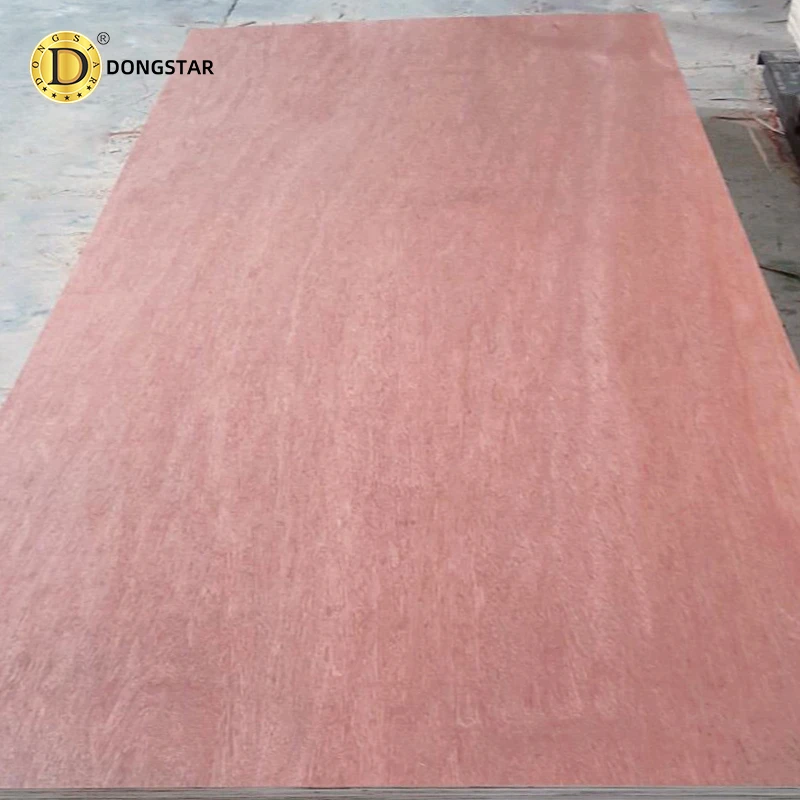
Vietnam commercial plywood is worth considering when a buyer needs stable specifications, flexible core options, export-scale production, and competitive landed cost. Standard orders often use 1220 × 2440 mm sheets in 3–25 mm thicknesses, with acacia, eucalyptus, poplar, rubberwood, mixed hardwood, or Okoume-related constructions available according to application. An 18 mm furniture panel and an 18 mm packaging panel may share the same dimensions but require different veneer grades, moisture ranges, bonding systems, and tolerances. For European buyers in 2026, formaldehyde performance, timber origin, product documentation, EN-related requirements, and EUDR preparation can carry as much weight as the factory price.
Vietnam's plywood sector benefits from a large plantation-based wood-processing industry and an established furniture export supply base. Commercial plywood production can therefore draw on species such as acacia, eucalyptus, rubberwood, poplar, and mixed hardwood rather than relying on one fixed core structure. A normal 4 × 8 ft sheet measures about 1220 × 2440 mm, while commonly requested thicknesses run from approximately 3 mm to 25 mm. A 15 mm panel may be made for cabinet parts, interior partitions, packaging, retail fixtures, or furniture frames, but each use places different demands on veneer quality.
That difference starts inside the board rather than on its face. A low-priced sheet can contain wider core gaps, overlapping veneers, uneven veneer thickness, poorly repaired defects, or moisture differences between layers. When a furniture plant cuts 1,000 sheets into narrow components, a small variation repeated across hundreds of parts can create more rework than the original material saving. Buyers therefore often specify thickness tolerance, permitted core gaps, face grade, back grade, number of plies, sanding, moisture range, and bonding requirement before production.
For example, nominal thickness alone provides limited purchasing information:
| Specification | Typical purchasing point |
|---|---|
| Panel size | 1220 × 2440 mm |
| Thickness | 3–25 mm depending on use |
| Common furniture sizes | 9, 12, 15, 18 mm |
| Core | Acacia, eucalyptus, poplar, mixed hardwood, rubberwood or specified veneer |
| Surface | Natural veneer, engineered veneer or utility face |
| Moisture | Agreed according to use and shipment conditions |
| Bonding | Selected for dry, humid or exterior-related service conditions |
| Inspection | Thickness, dimensions, surface, core, bonding and packing |
An importer buying 18 mm plywood may, for instance, request a much narrower thickness range for CNC-machined cabinets than for shipping crates. CNC routing, edge drilling, dowel fitting, laminating, and automatic assembly depend on repeatable dimensions. A panel that moves noticeably above or below the agreed thickness can affect tool settings and finished part alignment even when its surface looks acceptable.
Moisture deserves the same attention because wood veneer remains hygroscopic after pressing. A buyer should not treat one moisture reading from one sheet as representative of a container. Measurements are more useful when taken from several boards and several positions within each board. In a shipment containing thousands of sheets, sampling 5 or 10 panels gives only a limited picture; larger random checks provide a better view when the order has tight furniture-manufacturing requirements.
The bonding specification should then match the environment where the board will actually be used. Under European plywood terminology, EN 636 separates plywood intended for dry, humid, and exterior conditions, while EN 314-2 uses Bond Classes 1, 2, and 3. A Bond Class 3 glue line does not automatically make every plywood construction suitable for unrestricted exterior use because veneer durability and the complete panel construction also matter.
A furniture importer may therefore ask for dry-interior performance, while a contractor supplying protected building applications may require a different bonding level. Specifying “waterproof plywood” without a test reference leaves too much room for interpretation. A purchase specification stating the intended service condition, relevant standard, test method, and accepted result gives both supplier and buyer a measurable basis for inspection.
Formaldehyde requirements add another measurable item for interior products. Under the E1 classification referenced in EN 13986, the chamber-test limit is 0.1 ppm, equivalent to 0.124 mg/m³ after a 28-day EN 717-1 test. Furniture and interior-panel buyers should therefore request the actual test method and report rather than relying only on an “E1” label printed on packaging.
Surface grade becomes more important once plywood is overlaid, painted, veneered, or used on a visible furniture component. A crate manufacturer may accept filled knots, colour variation, and utility-grade patches. A cabinet manufacturer applying a thin decorative layer may require tighter sanding and fewer face repairs because defects underneath can remain visible after finishing.
The same purchasing logic applies to Okoume-faced products. Okoume is valued in many panel applications for its relatively uniform appearance and workable surface, but a buyer still needs to check what sits below the face veneer. An Okoume Plywood Supplier should therefore be evaluated on face thickness, core construction, bonding, sanding, dimensional tolerance, packaging, and batch consistency rather than on the species name alone.
A clean face cannot compensate for poor internal construction. Cutting sample sheets into several sections usually reveals core gaps, overlaps, veneer joints, glue-line quality, and layer consistency more clearly than checking an unopened full sheet.
Sampling is especially useful before a first container order. One attractive showroom panel says little about production consistency across 500, 1,000, or 2,000 sheets. Buyers can cut several approved samples, measure thickness at multiple points, inspect the edges, test bonding where required, and record acceptable defects. The approved board should represent normal production, not a hand-selected panel that cannot be reproduced during mass manufacturing.
Packing then affects whether the approved quality arrives in usable condition. Plywood is normally shipped in bundles, and panel thickness changes the sheet count that can fit within a given volume and payload. A bundle of 18 mm panels contains far fewer sheets than the same-height bundle of 6 mm panels. Pallet height, steel or PET straps, corner protection, plastic wrapping, bottom supports, container payload, and unloading equipment should therefore be agreed before loading.
Container economics should be compared by usable cubic metres and usable sheets rather than unit price alone. If Supplier A quotes 3% less per sheet but uses poor pallet dimensions, ships fewer usable panels per container, or produces a higher rejection rate, the landed material cost can exceed an apparently more expensive offer. Importers working with regular monthly containers usually gain more from consistent specifications than from changing factories for a very small price difference.
Vietnam manufacturers can also adjust construction for different sales channels. A distributor may buy a utility panel for packaging customers, a cleaner sanded panel for furniture workshops, and a separate construction specification for contractors. OEM orders may cover face veneer, core composition, sheet size, thickness, edge marks, printed labels, pallet design, bundle quantity, private branding, and documentation.
Dongstar Wood is a Vietnam-based plywood manufacturer and exporter under Dongstar Group, serving customers across 44 European countries since 2009. We specialize in commercial plywood, film faced plywood, construction plywood, birch plywood, furniture plywood, and customized plywood solutions.
Backed by CE 2+, FSC®, EUDR, DOP, and SEDEX (BSCI) certifications, we meet European standards for quality, sustainability, and compliance. With over 15 years of manufacturing and export experience, we support importers, distributors, furniture manufacturers, and construction companies with reliable plywood supply and OEM/ODM solutions.
European procurement now also requires closer attention to timber-source information. As of 2026, the European Commission states that EUDR application begins on 30 December 2026 for large and medium operators and on 30 June 2027 for most micro and small operators; smaller operators already covered by the EU Timber Regulation follow the December 2026 date. Importers should therefore align species identification, supplier records, origin information, and required due-diligence data with their own legal obligations.
Documentation should be checked against the product actually purchased. A certificate issued for one factory, product family, glue system, or production scope should not automatically be assumed to cover every commercial plywood order. Buyers can compare company names, manufacturing addresses, product descriptions, standard references, report dates, validity periods, test laboratories, and certificate numbers before accepting documents for a shipment.
For furniture production, three measurements usually deserve repeated checks: thickness, flatness, and internal construction. For packaging, density, fastening performance, board strength, and cost may receive more attention. For protected construction applications, bonding class, durability, structural documentation, and dimensional stability can become more important. A specification should follow the final use rather than copying a previous purchase order.
A practical factory inspection can use several boards taken from different bundles instead of only the top sheet. Inspectors can measure length, width, diagonal squareness, thickness at several locations, surface repairs, edge condition, moisture, and visible core defects. Cutting selected boards into smaller pieces also helps show whether defects are isolated or repeated across the panel.
Purchase contracts can then set measurable acceptance ranges rather than terms such as “good quality,” “high grade,” or “export quality.” An order can state nominal 18 mm thickness with an agreed tolerance, specified face/back grade, named core construction, defined moisture range, required bonding class, packing method, quantity tolerance, marking, and inspection procedure. The same format also makes later repeat orders easier to compare.
Price still matters, but it works best when all suppliers quote the same specification. Comparing a 15 mm mixed-core utility panel with a 15 mm calibrated furniture panel produces little useful purchasing information even though both products are called commercial plywood. Quotes become more comparable when dimensions, veneer structure, bonding, surface, tolerance, test requirements, packing, Incoterm, port, and order quantity are identical.
A buyer planning 10 or 20 containers per year can also ask how the factory controls changes between production batches. Veneer supply, pressing conditions, sanding settings, repair work, and operator practices can vary through the year. Recorded specifications, approved samples, production inspection, and pre-shipment checks help keep later orders close to the standard established during the first shipment.
Vietnam commercial plywood is therefore most suitable for buyers who purchase by specification rather than product name. A 1220 × 2440 × 18 mm sheet should be treated as the starting description; species, ply construction, moisture, bonding, surface, emissions, tolerances, inspection method, documentation, and packing determine how the board performs after arrival. For importers serving European furniture, distribution, packaging, and construction markets in 2026, those measurable details provide a more useful basis for supplier comparison than a price-per-sheet quotation alone.