How Long Does It Take to Install beer brewing equipment?
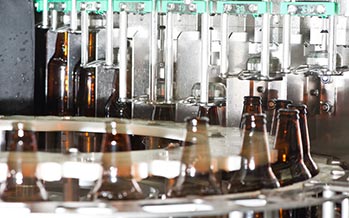
A typical commercial beer brewing equipment installation takes about 2–4 weeks for a 5–10 BBL brewery, assuming the building, electrical service, drainage, water, cooling, and heating utilities are ready before delivery. A 10–30 BBL facility often needs 4–8 weeks because it has more tanks, piping, pumps, controls, and utility connections. Small 3–5 BBL systems may be positioned and connected in 3–7 days, while large automated breweries can require 8–16 weeks. Installation time also depends on whether tanks arrive as separate vessels or factory-assembled skids, with preassembled systems reducing field work.
The installation clock normally starts with delivery, inspection, rigging, and equipment positioning. A small system with 4–6 tanks can often be unloaded within 1 day and positioned within another 1–2 days when door openings, floor access, and lifting equipment have been planned correctly. Larger projects may spend several days on rigging alone because tanks can be tall, heavy, and difficult to move through finished buildings. Equipment drawings should therefore be checked against actual door widths, ceiling heights, floor loading limits, and access routes before shipment.
That physical placement leads into the mechanical connection stage. Fermenters, bright beer tanks, brewhouses, pumps, heat exchangers, CIP systems, and water tanks need sanitary piping designed around the final layout. A 10 BBL brewery with 8 fermenters can have substantially more field piping than a 5 BBL brewery with 3 fermenters, even though both systems may use a similarly sized brewhouse. Piping quantity, rather than vessel volume alone, often determines labor hours.
A useful planning estimate for a prepared 5–10 BBL site is 10–20 working days from equipment delivery to commissioning, with the lower end applying to highly preassembled systems and the upper end applying to sites requiring more field piping.
Cooling work adds another layer because fermentation vessels need temperature control throughout production. Commercial systems may use glycol circuits, pumps, heat exchangers, valves, and insulated supply and return lines. One Alfa Laval beer-cooling configuration, for example, lists 25% propylene glycol as the cooling medium and a secondary-side temperature of −3°C, illustrating why cooling design has to be coordinated with piping, pump capacity, insulation, and heat-exchanger specifications rather than treated as a simple tank connection.
The number of tanks changes the cooling installation substantially. If a brewery has 12 fermenters and 4 bright beer tanks, each vessel needs a correctly routed cooling branch, valves, sensors, and control connections. By comparison, a three-fermenter system may require less than one-third of the branch connections. A project reviewed in 2023 by Alfa Laval also used external heat exchangers and cooling equipment on multiple large fermentation vessels, showing how fermentation cooling becomes a separate engineering package as tank numbers increase.
The next stage is utility connection, which can take longer than installing the vessels themselves. Electric systems require correctly sized feeders, disconnects, panels, controls, and grounding. Steam systems add boilers, steam lines, regulators, condensate handling, and safety equipment. Gas-fired systems require fuel piping and applicable local inspection. A brewery that discovers after delivery that its electrical service is undersized can lose several weeks while the utility connection is redesigned or upgraded.
Electrical clearance also has to be considered during layout. U.S. construction requirements call for sufficient working space around electrical equipment, including a minimum 3 ft width in certain conditions involving energized equipment and 6 ft 6 in of vertical clearance where the cited rule applies. These dimensions can affect control-panel placement, service access, and equipment-room layout, so electrical drawings should be completed before tanks are installed.
Water and drainage usually come next because brewing creates repeated washdown and cleaning flows. The required piping size depends on process design, cleaning equipment, available pressure, and local plumbing requirements. A brewery using automated CIP may need substantially greater flow than a small manual system. For example, Alfa Laval lists a minimum CIP flow of 2,700 kg/h on one beer-cooling configuration, demonstrating that cleaning flow should be checked from equipment specifications rather than assumed from ordinary building plumbing.
The drainage layout also affects installation order. If floor drains, trench drains, or process waste lines are unfinished, tanks may have to remain outside until concrete work is completed. A contractor may finish a 10 BBL brewhouse in several days, but an unfinished floor can still prevent production from starting. This is why site preparation should reach substantially complete status before delivery rather than being scheduled after the tanks arrive.
For a brewery working with a supplier such as hgmc brewing, the installation package should be reviewed before shipment. Useful documents include the general arrangement drawing, tank dimensions, utility schedule, piping and instrumentation diagram, electrical load list, connection drawings, valve schedule, and equipment manuals. A complete drawing package allows local contractors to prepare utilities while the equipment is still being manufactured.
For a 10 BBL brewery, having the utility connection points fixed before delivery can remove several days of site coordination because electricians, plumbers, refrigeration technicians, and brewery installers can work from the same layout.
Commissioning usually follows mechanical installation. Pumps are checked for correct rotation, valves are opened and closed through their intended sequences, sensors are verified, glycol circuits are filled and checked for leaks, and heating systems are tested under controlled conditions. These tests should be performed before beer is introduced. A 2025 Alfa Laval brewery project, for example, measured specific improvements after modifying wort-cooling equipment, including a change in heat-exchanger operating performance from about 82% to 88.1% and a reduction in glycol-system demand from 578 kW to 373 kW.
The testing stage is also where control-system problems tend to appear. A temperature sensor may be installed at the wrong point, a valve may be wired to the wrong output, or a pump may not achieve the expected flow at the required pressure. These issues can often be corrected within hours when documentation is accurate, but they can extend commissioning when installers must trace unidentified cables or modify completed piping.
Cleaning and sanitation add another time block before the first commercial brew. Product-contact surfaces need appropriate cleaning procedures, and CIP systems must be verified for flow and coverage according to the equipment design. Heat exchangers are also normally designed with CIP requirements in mind; Alfa Laval describes brewery heat exchangers with defined minimum CIP flow rates and pressure-drop specifications rather than treating cleaning as an afterthought.
Safety requirements can also affect the schedule, especially on larger installations. Brewery tanks, pits, utility spaces, and vessels can create confined-space issues depending on their configuration and intended entry. OSHA requires employers to identify and evaluate permit-required confined spaces and to establish procedures covering isolation, atmospheric hazards, and entry conditions where applicable. This work should be included in the installation plan rather than added after construction starts.
The installation method matters as much as the equipment size. Factory-assembled skids can reduce field connections because pumps, valves, controls, and heat exchangers may already be mounted and tested. Alfa Laval describes some beer-cooling equipment as preassembled on a skid and factory tested before delivery. For a small brewery, this design can reduce field assembly from several workdays to a shorter connection and verification period.
A practical planning table looks like this:
| Brewery configuration | Typical on-site period* | Main work |
|---|---|---|
| 3–5 BBL, 3–6 tanks | 3–7 days | Positioning, utilities, testing |
| 5–10 BBL, 6–12 tanks | 2–4 weeks | Piping, glycol, electrical, commissioning |
| 10–30 BBL, 10–20+ tanks | 4–8 weeks | Larger utility and piping scope |
| 30+ BBL automated plant | 8–16+ weeks | Mechanical, electrical, controls, commissioning |
*Planning ranges, not fixed industry standards. Actual duration depends on building readiness, local code review, tank quantity, automation, piping scope, contractor availability, and delivery condition.
For a 5–10 BBL brewery planned in 2026, a reasonable schedule is to complete building utilities first, reserve 1–2 days for receiving and rigging, allow several days for vessel positioning and piping, reserve another several days for electrical and cooling connections, and keep at least 2–3 days for testing and commissioning. A project with 8 fermenters will normally require more work than one with 3 fermenters, while a preassembled skid can shorten the field portion.
A 10–20% schedule allowance is often useful when the site has uncertain construction conditions, but it should be treated as a planning provision rather than a guaranteed installation requirement. The biggest differences usually come from unfinished utilities, revised pipe routes, missing components, inspection dates, or changes made after equipment delivery. For comparison, a brewery that has its drains, electrical service, glycol lines, water supply, and ventilation finished before delivery has far fewer dependencies than a site still completing construction.
In practical terms, installation can be measured in days for a prepared small brewery, weeks for a normal craft brewery, and several months for a large automated plant. The equipment itself is only one part of the schedule; the surrounding utilities and commissioning work determine when the brewery can actually produce its first saleable batch.