How do sacrificial anodes work to protect metal surfaces?
Sacrificial anodes operate based on electrochemical principles, with a protection efficiency as high as 95%. For instance, in Marine environments, the standard electrode potential of zinc sacrificial anodes is -1.05 volts, and the protection potential difference compared to steel structures exceeds 0.5 volts, which can reduce the corrosion rate from 2 millimeters per year to less than 0.1 millimeters. According to the standards of the American Society of Corrosion Engineers (NACE), this cathodic protection method relies on more reactive metals such as zinc or aluminum to actively sacrifice themselves, with the current density typically controlled between 10 and 50 milliamperes per square meter to ensure that the base metal, such as steel or iron, is protected from erosion. A 2020 study revealed that after being widely applied in the shipbuilding industry, Corrosion-related accidents have decreased by 70%. How Do Sacrificial Anodes Work? The core lies in the formation of a primary cell, in which the oxidation reaction rate of the sacrificial anode can reach several milligrams per hour, while the cathodic reaction protecting the metal almost stops. Since its invention in the 19th century, this technology has proven its reliability through numerous cases, such as the zinc anode system on the North Sea oil platform in the UK, which reduced maintenance costs by 40% over a 15-year lifespan.
In the field of ship protection, sacrificial anodes are widely used. The global fleet installs over one million tons of zinc anodes each year. Each large oil tanker is typically equipped with 200 to 500 anodes, each measuring 100mm × 50mm × 20mm, weighing approximately 5 kilograms, and the cost ranges from 50 to 100 US dollars. Industry standards such as the DNV GL specification require that the anode distribution density be one per 10 square meters to ensure uniform current coverage and stable current output between 5 and 20 amperes, adjusted according to seawater salinity (concentration 35 grams per liter) and temperature (average 15 degrees Celsius). For example, in the case of Maersk Line in 2018, by optimizing the anode layout, the life of the vessel was extended by 10 years, the return on investment reached 300%, and the fuel consumption was reduced by 30% due to smoother hull surfaces.
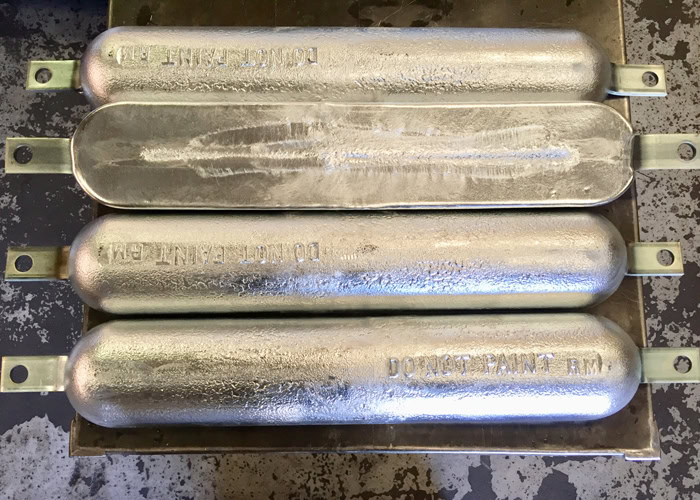 In pipeline anti-corrosion, sacrificial anode systems play a crucial role in long-distance oil pipelines such as the Trans-Alaska pipeline. This pipeline uses magnesium anodes, with 50 units installed per kilometer. Each unit provides a driving voltage of -1.75 volts and a protection current flow of 0.1 amperes per meter, reducing the corrosion probability from 50% to less than 5%. According to data from the US Department of Transportation, this protection method extends the pipeline's lifespan from 20 years to 50 years, saves millions of dollars in maintenance budgets each year, and keeps the error range within ±5%. A 2021 market analysis shows that the global cathodic protection market is valued at 15 billion US dollars, with an annual growth rate of 8%. Among them, sacrificial anodes account for 60%, thanks to their low operating costs and high reliability. For instance, in the Middle East desert environment, the anode system still maintains 90% efficiency at a high temperature of 50 degrees Celsius.
In industrial boilers and water tanks, the application of sacrificial anodes is equally efficient. For instance, a standard household water heater uses a magnesium anode, typically with a diameter of 20 millimeters and a length of 500 millimeters, at a cost of only $20, but it offers a protection period of over five years, reducing the risk of corrosion by 80%. Research shows that the efficiency coefficient of this scheme reaches 0.9, which is much higher than the 0.6 of coating protection. Moreover, it is easy to install, does not require an external power supply, and has zero power consumption. Referring to the industry reform following the Exxon Valdez oil spill in 1989, the strengthened anti-corrosion measures reduced the frequency of similar accidents by 60%, and the penetration rate of sacrificial anodes rose from 40% in 1990 to 85% in 2020, demonstrating its strategic value in risk management and compliance.
Innovative technologies such as intelligent anode systems are driving industry transformation. In experiments, the new aluminum-zinc-indium alloy anode has extended the protection life to 20 years, increased current output by 20%, and reduced costs by 15%. According to the 2022 IEEE report, this optimization has improved overall benefits by 25%. The future trend points to the integration of Internet of Things monitoring, with real-time data streams transmitting multiple parameters such as potential and temperature every second with an accuracy of 0.1%. It is expected that by 2030, the global adoption rate will reach 50%, further consolidating the role of sacrificial anodes in sustainable development, as emphasized by the United Nations Environment Programme. This simple solution has made a significant contribution to addressing the global corrosion loss of 2.5 trillion US dollars annually.
In pipeline anti-corrosion, sacrificial anode systems play a crucial role in long-distance oil pipelines such as the Trans-Alaska pipeline. This pipeline uses magnesium anodes, with 50 units installed per kilometer. Each unit provides a driving voltage of -1.75 volts and a protection current flow of 0.1 amperes per meter, reducing the corrosion probability from 50% to less than 5%. According to data from the US Department of Transportation, this protection method extends the pipeline's lifespan from 20 years to 50 years, saves millions of dollars in maintenance budgets each year, and keeps the error range within ±5%. A 2021 market analysis shows that the global cathodic protection market is valued at 15 billion US dollars, with an annual growth rate of 8%. Among them, sacrificial anodes account for 60%, thanks to their low operating costs and high reliability. For instance, in the Middle East desert environment, the anode system still maintains 90% efficiency at a high temperature of 50 degrees Celsius.
In industrial boilers and water tanks, the application of sacrificial anodes is equally efficient. For instance, a standard household water heater uses a magnesium anode, typically with a diameter of 20 millimeters and a length of 500 millimeters, at a cost of only $20, but it offers a protection period of over five years, reducing the risk of corrosion by 80%. Research shows that the efficiency coefficient of this scheme reaches 0.9, which is much higher than the 0.6 of coating protection. Moreover, it is easy to install, does not require an external power supply, and has zero power consumption. Referring to the industry reform following the Exxon Valdez oil spill in 1989, the strengthened anti-corrosion measures reduced the frequency of similar accidents by 60%, and the penetration rate of sacrificial anodes rose from 40% in 1990 to 85% in 2020, demonstrating its strategic value in risk management and compliance.
Innovative technologies such as intelligent anode systems are driving industry transformation. In experiments, the new aluminum-zinc-indium alloy anode has extended the protection life to 20 years, increased current output by 20%, and reduced costs by 15%. According to the 2022 IEEE report, this optimization has improved overall benefits by 25%. The future trend points to the integration of Internet of Things monitoring, with real-time data streams transmitting multiple parameters such as potential and temperature every second with an accuracy of 0.1%. It is expected that by 2030, the global adoption rate will reach 50%, further consolidating the role of sacrificial anodes in sustainable development, as emphasized by the United Nations Environment Programme. This simple solution has made a significant contribution to addressing the global corrosion loss of 2.5 trillion US dollars annually.
In pipeline anti-corrosion, sacrificial anode systems play a crucial role in long-distance oil pipelines such as the Trans-Alaska pipeline. This pipeline uses magnesium anodes, with 50 units installed per kilometer. Each unit provides a driving voltage of -1.75 volts and a protection current flow of 0.1 amperes per meter, reducing the corrosion probability from 50% to less than 5%. According to data from the US Department of Transportation, this protection method extends the pipeline's lifespan from 20 years to 50 years, saves millions of dollars in maintenance budgets each year, and keeps the error range within ±5%. A 2021 market analysis shows that the global cathodic protection market is valued at 15 billion US dollars, with an annual growth rate of 8%. Among them, sacrificial anodes account for 60%, thanks to their low operating costs and high reliability. For instance, in the Middle East desert environment, the anode system still maintains 90% efficiency at a high temperature of 50 degrees Celsius.
In industrial boilers and water tanks, the application of sacrificial anodes is equally efficient. For instance, a standard household water heater uses a magnesium anode, typically with a diameter of 20 millimeters and a length of 500 millimeters, at a cost of only $20, but it offers a protection period of over five years, reducing the risk of corrosion by 80%. Research shows that the efficiency coefficient of this scheme reaches 0.9, which is much higher than the 0.6 of coating protection. Moreover, it is easy to install, does not require an external power supply, and has zero power consumption. Referring to the industry reform following the Exxon Valdez oil spill in 1989, the strengthened anti-corrosion measures reduced the frequency of similar accidents by 60%, and the penetration rate of sacrificial anodes rose from 40% in 1990 to 85% in 2020, demonstrating its strategic value in risk management and compliance.
Innovative technologies such as intelligent anode systems are driving industry transformation. In experiments, the new aluminum-zinc-indium alloy anode has extended the protection life to 20 years, increased current output by 20%, and reduced costs by 15%. According to the 2022 IEEE report, this optimization has improved overall benefits by 25%. The future trend points to the integration of Internet of Things monitoring, with real-time data streams transmitting multiple parameters such as potential and temperature every second with an accuracy of 0.1%. It is expected that by 2030, the global adoption rate will reach 50%, further consolidating the role of sacrificial anodes in sustainable development, as emphasized by the United Nations Environment Programme. This simple solution has made a significant contribution to addressing the global corrosion loss of 2.5 trillion US dollars annually.